
Parkinson’s Disease
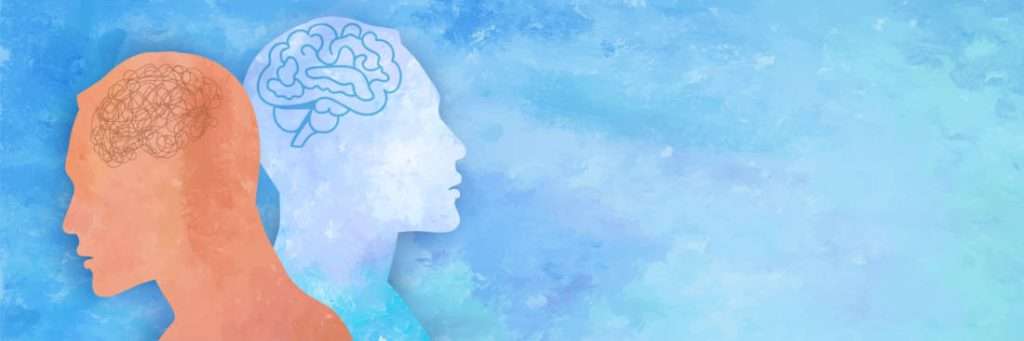
Being diagnosed with Parkinson’s Disease (PD) can bring many questions and emotions. Some people want to learn everything they can about PD; others look for understanding and reassurance. Most need a mix of both as they begin to navigate life with this condition. There are different types of diagnoses:
1. Idiopathic Parkinson’s Disease – Is the most common type of Parkinson’s. “Idiopathic” means the cause is unknown.
2. Genetic Parkinson’s – Is a form of PD caused by specific gene mutations, and more likely if Parkinson’s runs in the family.
3. Atypical Parkinsonism (Parkinson’s-Plus Syndromes) – Are conditions that resemble Parkinson’s but have additional symptoms and usually don’t respond as well to typical Parkinson’s medications like levodopa.
4. Vascular Parkinsonism – Caused by small strokes affecting areas of the brain involved in movement.
5. Drug-Induced Parkinsonism – Parkinson-like symptoms caused by certain medications that can block dopamine in the brain.
6. Young-Onset Parkinson’s Disease – Also refered to as Early-Onset Parkinson’s Disease, is a rarer form of Parkinson’s diagnosed in individuals under the age of 50, typically after age 21. It accounts for 10–20% of all Parkinson’s cases globally.
The exact cause of PD isn’t fully understood, and currently, there is no cure. However, many treatments and strategies can help people manage their symptoms and live fulfilling lives. PD is a slowly progressive condition, meaning that focusing on ways to adapt and manage symptoms over time is key.
It’s important to remember that PD affects everyone differently. No two people experience the same journey. Some may notice changes in movement, while others experience challenges with sleep, mood, or thinking. This is why learning about PD and connecting with others is so important.
Physical Symptoms of Parkinson’s Disease
Parkinson’s disease manifests differently in each person, with symptoms appearing at various stages of their journey. For some, symptoms may remain mild or absent in certain areas, while others experience more pronounced challenges.
Key Physical Symptoms Include:
- Dyskinesia: Involuntary movements, such as tremors or tics, often starting in one hand or foot.
- Rigidity: Stiffness or tension in muscles, making it difficult to move or stretch.
- Bradykinesia: Slowness of movement or difficulty initiating motion, especially after being still.
- Loss of Balance: Challenges with walking backward, standing upright, or turning.
- Loss of Voice: Reduced vocal projection, often leading to whispering or mumbling.
- Loss of Smell: An early symptom experienced by up to 95% of people with Parkinson’s.
- Difficulty Swallowing: Impaired muscle control in the jaw and throat, affecting speech and eating.
Non-Motor Symptoms of Parkinson’s Disease
Non-motor symptoms are equally impactful but less visible, often affecting cognitive and emotional well-being. These symptoms can be linked to age but are not always age-specific.
Key Non-Motor Symptoms Include:
- Cognitive impairment, such as memory challenges or difficulty concentrating.
- Mood disorders, including anxiety and depression.
- Sleep disturbances, such as insomnia or restless leg syndrome.
- Autonomic dysfunction, impacting blood pressure regulation, digestion, or bladder control.
PEI Parkinson Association Brochure
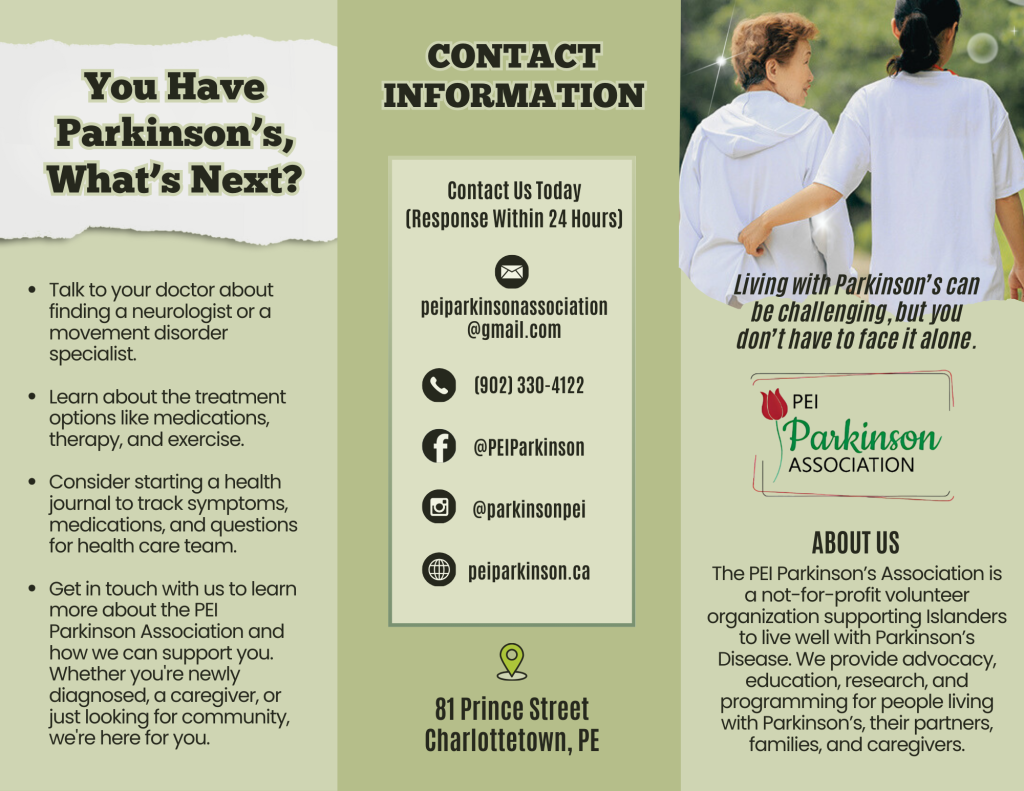
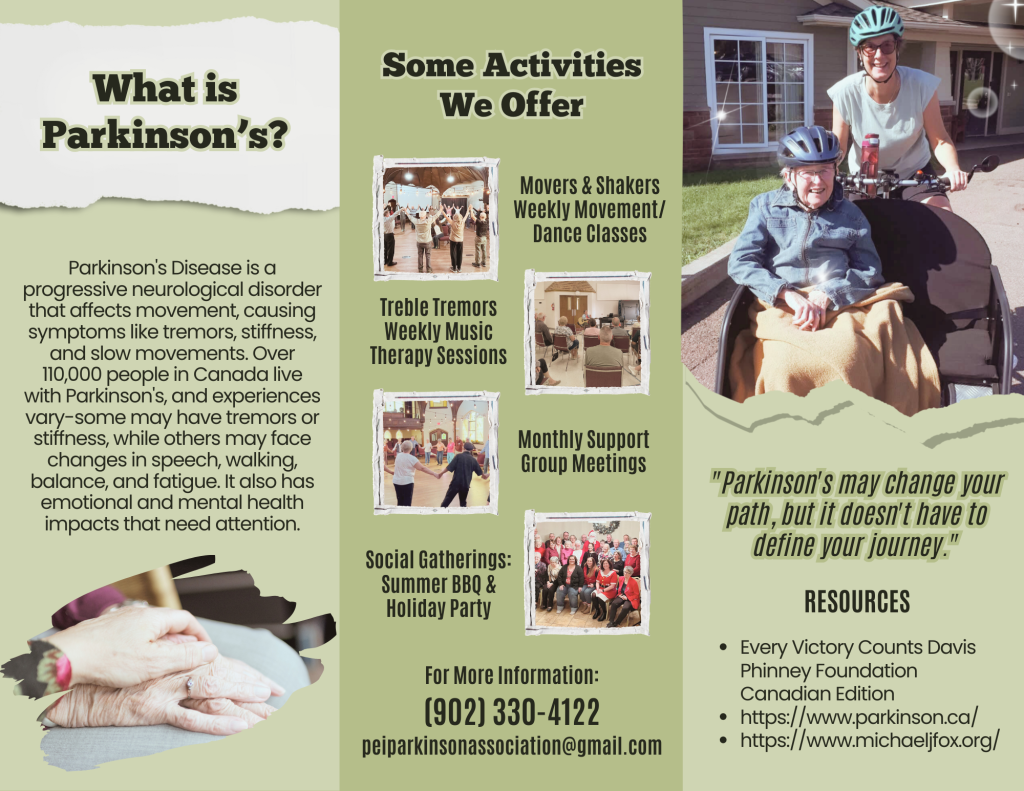
English
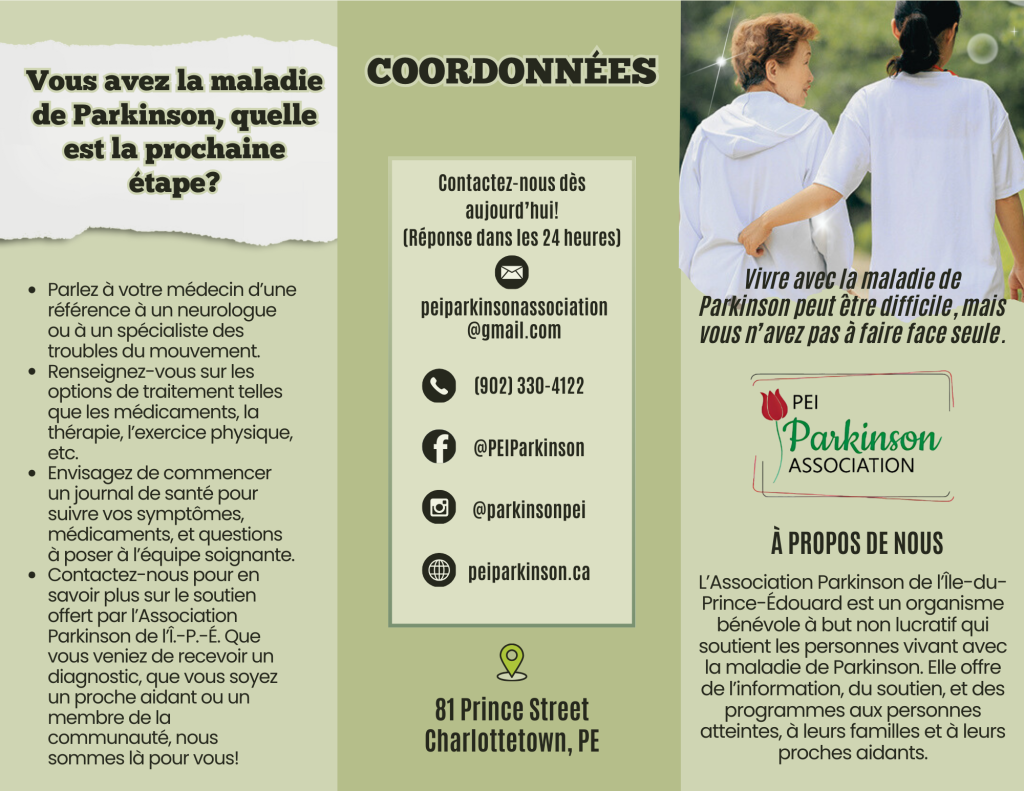
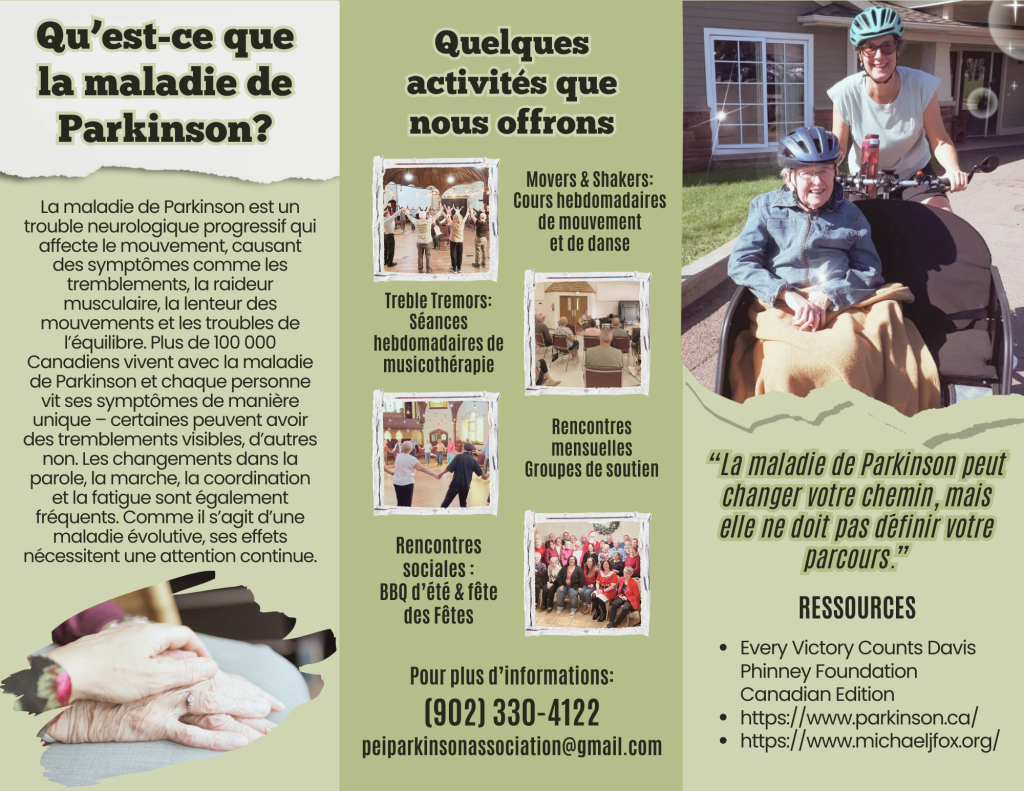
French
PEI Parkinson Association Poster
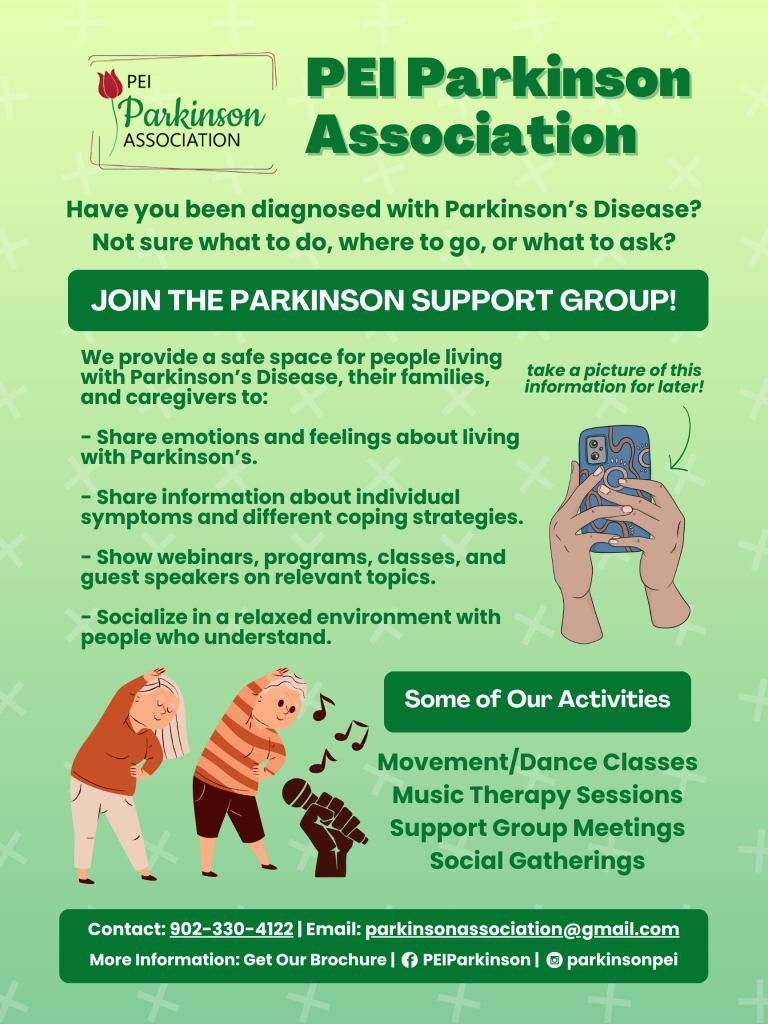
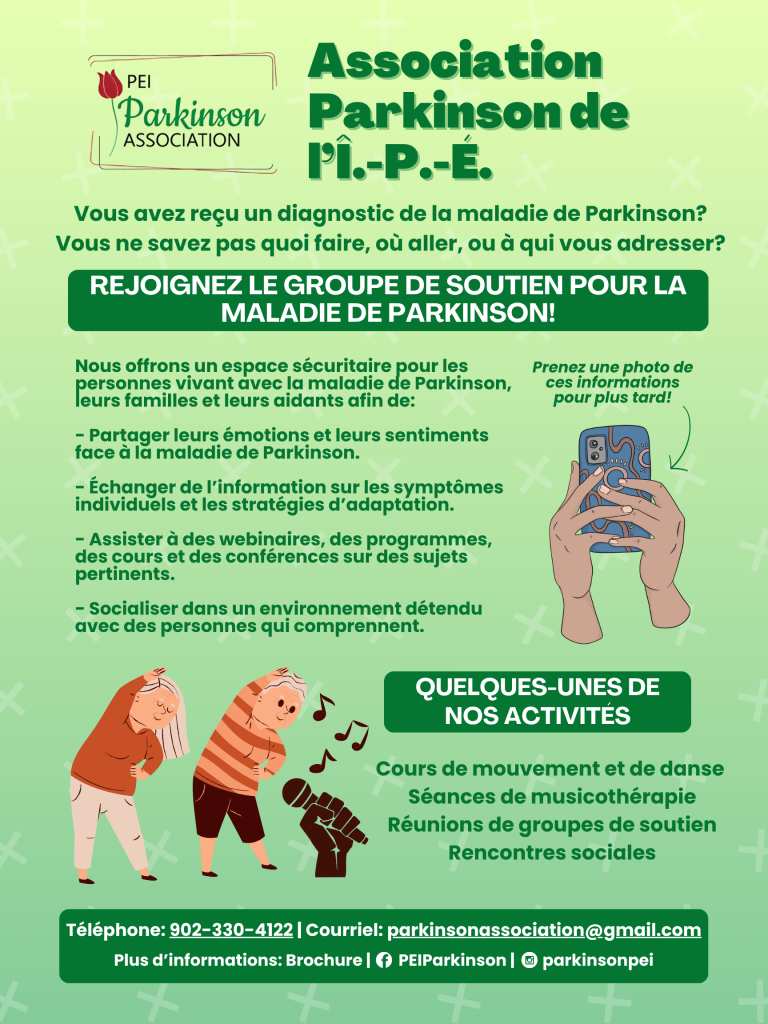
English & French